Taliesin West
Updated: Feb 28, 2025
February 2025
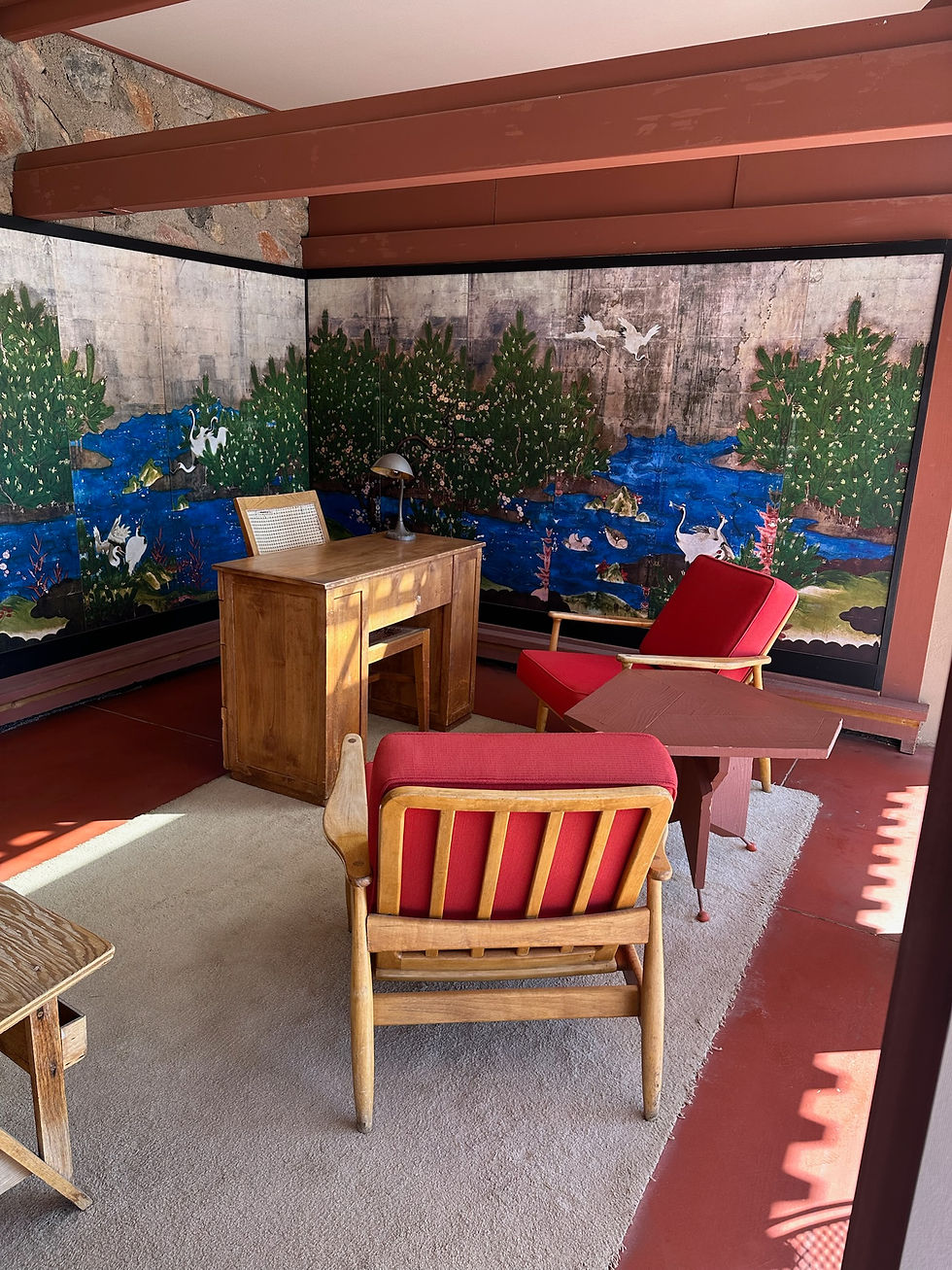
In the wake of the terrible accidental death of Svetlana Wright Peters and her children in late September of 1946, Frank Lloyd Wright called his good friend and collaborator, Dorothy Liebes, and asked her to come to Taliesin West – pronto! And to bring a loom.
Svetlana’s mother Olgivanna, Wright’s wife, was paralyzed by her grief, and Wright thought Liebes could help by reminding Olgivanna of the healing power of handwork. Liebes had the loom set up on the patio off of Olgivanna’s private study where the warmth of the late autumn sun and the meditative rhythms of throwing the shuttle worked their magic. The healing process began.
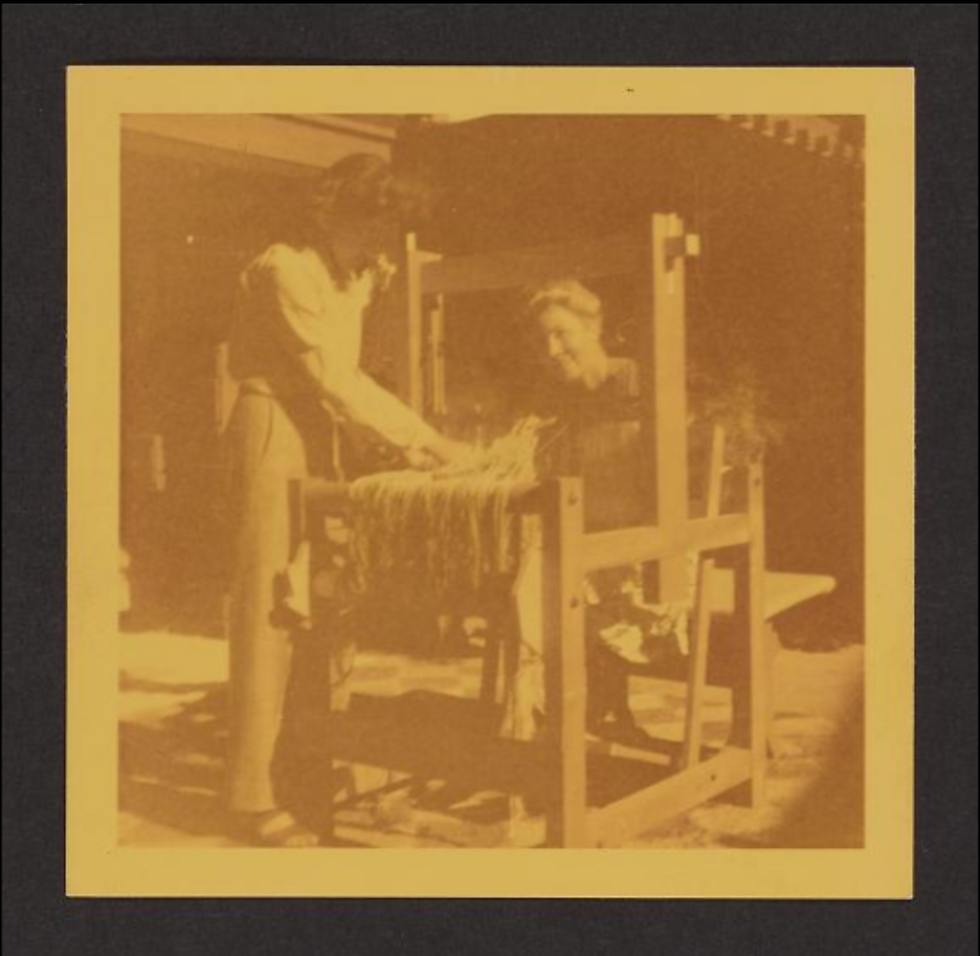
In the course of researching the Liebes biography that I am writing, I traveled to Taliesin West in early February and stood where this photo was taken. But my visit started in a very different part of the compound: the vault.
Taliesin West in Arizona and Taliesin in Wisconsin house the only existing trove dedicated to the Wrights’ personal lives. The collection is comprised of fine and decorative art, furniture, archival material, a library, the buildings and grounds themselves, and scores of hats. Assisted by Registrar Pat D. Evans, I was given the thrill of seeing dozens of Liebes textiles that are part of this collection.
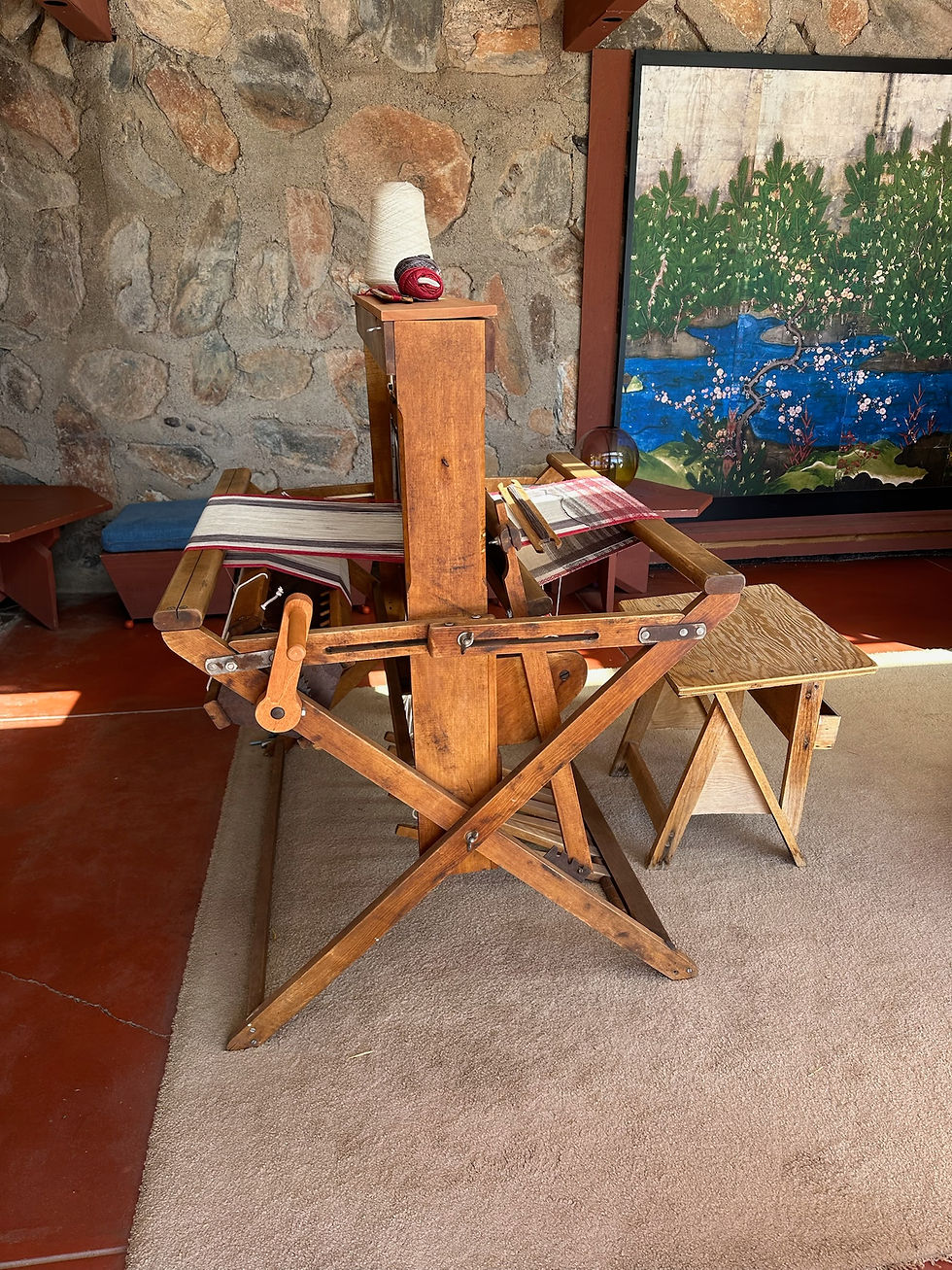
As Pat and I were chatting about the photo of Liebes and Olgivanna on the patio, Pat mentioned that there is currently a loom set up in the private study, and that a local weaver had been contracted to warp it and begin a pattern that fit the aesthetic. But she didn’t know the provenance of the loom. We got very excited for a minute, thinking that perhaps Liebes had left her loom with Olgivanna and that it was the one in the study. A quick visual inspection burst our bubble.
Back in the vault, I examined samples that Wright likely asked Liebes to prepare for one of his many commissions, as well as pillowcases that had been divested of their disintegrating forms. These would have been gifts to the family. The textiles are characteristic of Liebes’s creative flair: some loops, some twill, mostly plain weave. But fancy – even fanciful at times – fibers: rattan, bamboo, ribbon, metallic cord, chenille, silk, and something I’d not seen before, braided Lurex.
And the colors! A signature characteristic of Liebes’s work is bold hues, courageously combined, and these textiles are prime examples. To see images of all of them, please visit my shared album at https://www.icloud.com/sharedalbum/#B1w5BydzFxGPGR
The Frank Lloyd Wright Foundation is working to increase digital and physical access to its unique and invaluable collection. Any design aficionado will enjoy a stop at this UNESCO World Heritage Site when in the Phoenix/Scottsdale area. We took the Behind-the-Scenes guided tour which I highly recommend.


Comments